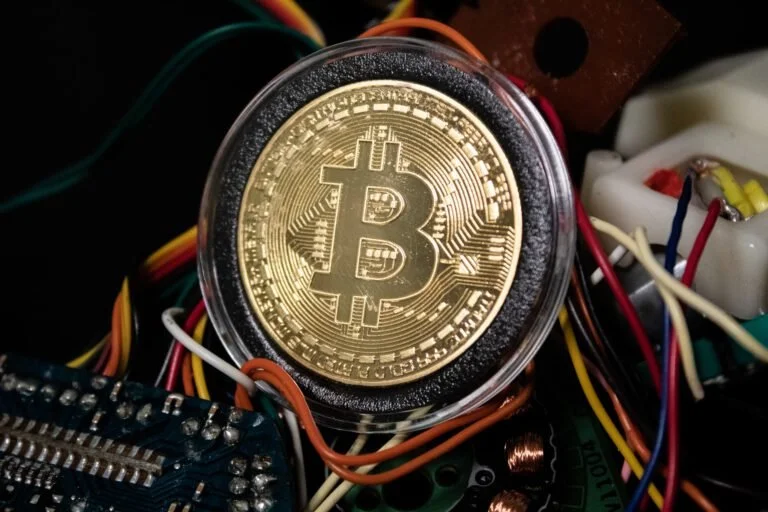


With Bitcoin turning the corner, one question that I’ve seen floating around the past week is:
“So how do we get to $100k?”

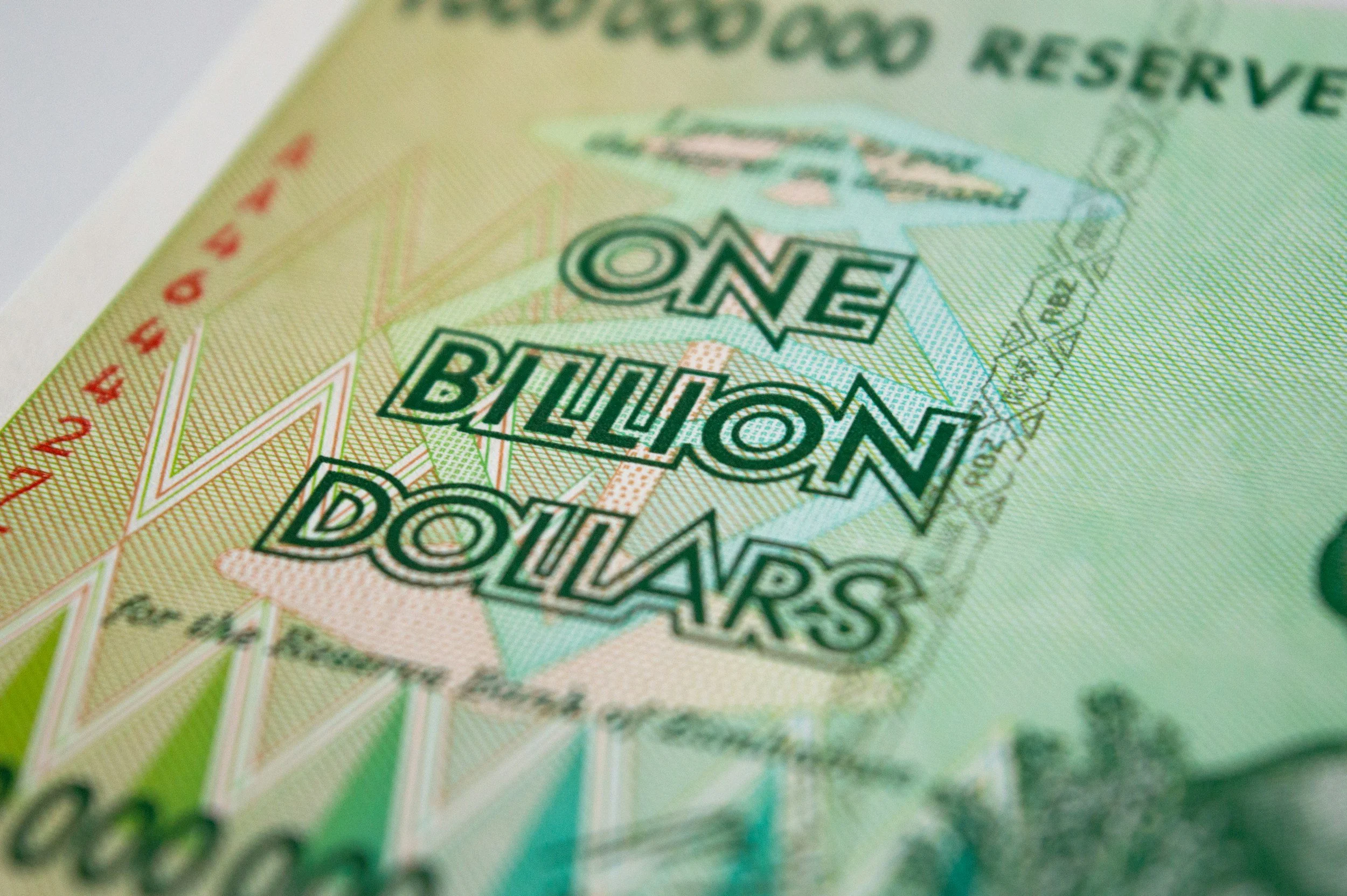
TLDR: Universal suffrage has a structural flaw: votes are free to cast, but the promises they buy are billed to someone else. As Tytler (probably apocryphally) observed, the public will always eventually vote for the politicians who give them stuff. Zimbabwe ran that experiment in fast forward, “one man, one vote” delivered Mugabe, 89.7 sextillion percent inflation, a dead currency, and the banana republic Smith predicted to the letter. My argument: it's time we stopped treating "one adult, one vote" as the final, unrevisable form of democracy and considered tying the franchise to net contribution: mechanically, transparently, for everyone. The bill for our slower version of the same experiment is now showing up in the bond market. That's part two
TLDR: Bitcoin starts today around $84,000, up ~30% (~$64,700) since our August 7 update (read update here) and fresh off an eight-month high, it opened the week near $85,000 and touched $87,000 on Wednesday before a hot US PMI sent Treasury yields above 5% and knocked it back under $84K, liquidating ~$510Macross the market in 24 hours (almost all longs). Crucially, the ETF bid didn't flinch: five straight inflow sessions totaling $2.65B, the best run since October 2025. And Bitwise's first institutional adoption report shows none of 15 major allocators cut crypto exposure during the ~50% drawdown, several added instead. The early-August "maximum pessimism" entry has played out; the opponent now is the bond market, not morale.
TLDR: Bitcoin is trading around $64,700–$65,000, roughly 48% below its all-time high of ~$126,200 (Oct 2025) and down ~45% year-over-year. The dominant news flow is the Coldcard hardware wallet exploit, with an attacker sweeping ~1,816 BTC (~$114M) from 5,200+ addresses since July 30 due to a firmware flaw dating to 2021. Sentiment is at rock bottom, Fear & Greed sits in "Extreme Fear" (~24) with persistent ETF outflows. Contrarian logic says moments of maximum pessimism like this are historically when the best long-term entries appear, but it's a principle, not a guarantee, and it's not financial advice.
Bitcoin broke $64k on softer U.S. inflation data, though core inflation and oil price hikes remain concerns. Markets expect Fed rates to hold steady ahead of the July meeting, with Fed Chair Kevin Warsh’s testimony closely watched. The rally triggered $105 M in short liquidations and drew $173 M net inflows into spot Bitcoin ETFs.
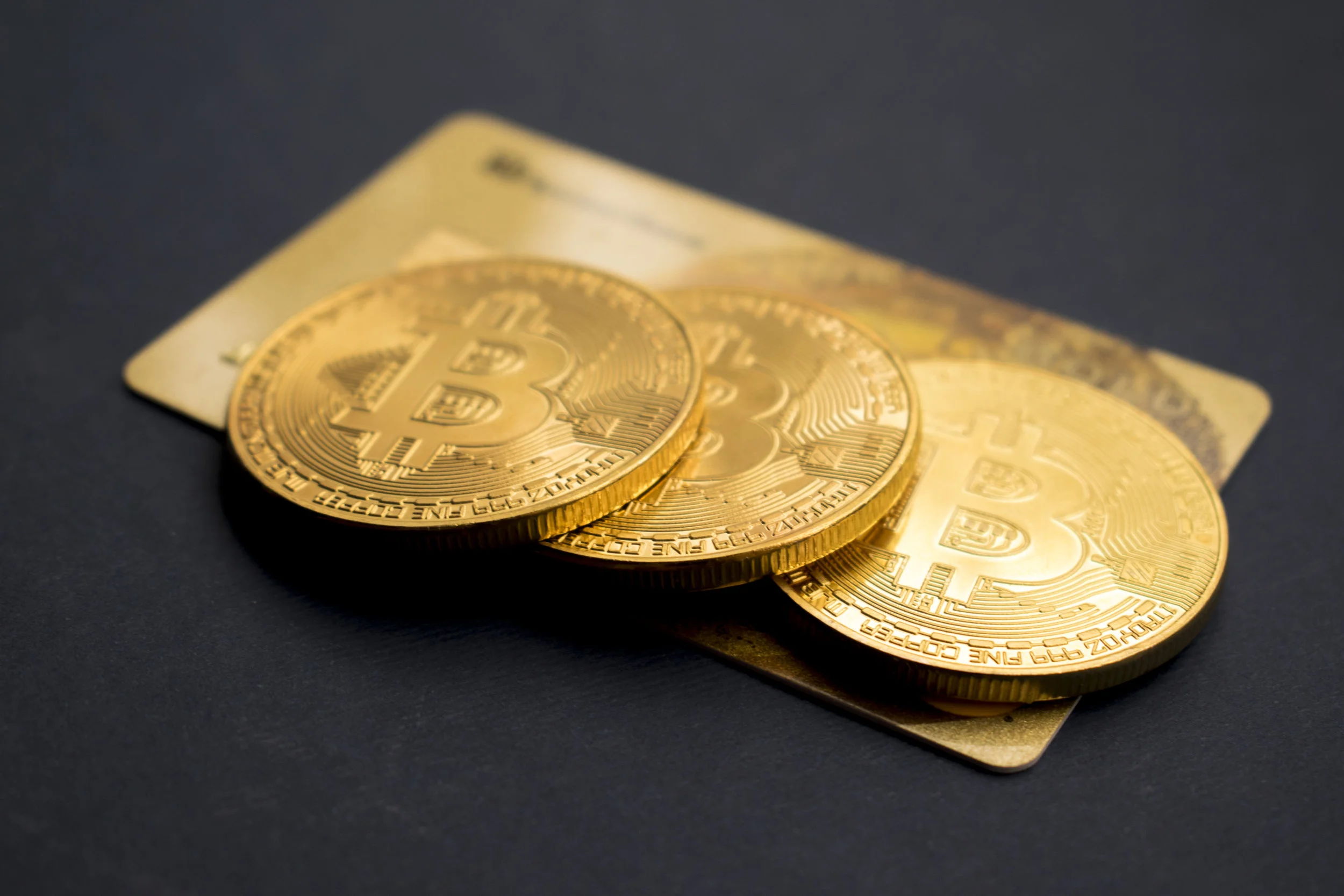
image by Elena Mozhvilo
This is a follow on article, I’d highly recommend that you first read - How do the top 1% stay in the top 1%?
In that article, to summarise, we cover:
highlevel Credit Suisse global wealth report numbers
pyramid of 4 global wealth categories
how the top top category, 1.1% of the population controls 45.8% of the global wealth and top 2 combined - 12.2% of the population controls a staggering 84.9% of all the global wealth
how the top 1% stay in the top 1% - they hedge for all outcomes
how many oz of gold are required to remain in the top 1% should we go back to a gold like or sound money standard when our fiat systems fail (why - because they always do fail in the end)
If you missed it - the magic number is 14oz of gold (per adult) to stay in the top 1%.
This got me thinking about Bitcoin, which is often compared to gold as a store of value type asset and I’m sure you will see from previous blogs, post and tweets - both are equally important as a hedge against:
money printing (or what ever you want to call it - same outcome)
inflation targeting (policies designed to destroy your wealth over a short period of time)
negative yielding bonds (more theft and logically it’s nonsensical - no sane person would ever lend money to others and pay them interest too).
So the question I’m going to try and answer here is how many bitcoin (BTC) would you need to stay in (or join) the top 1%?
Obviously the assumption is that neither fiat money or a gold standard survive and we move to a pure bitcoin standard where all the world’s wealth is backed by BTC.
This article is not about getting the exact mix of fiat, gold and bitcoin - its more about what the 100% BTC hedge would look like. At some point in the future, I will do a part 3 to this series with some calculations based on different probabilities i.e. 50/50 mix of gold and BTC or a 33% mix of Fiat, Gold and BTC.
When it comes to gold this is a moving target as more gold is mined each year, however the amounts we are talking about would not be material and when performing the same calculations for BTC, there are important points to factor in:
not all 21 million coins are available at present (i.e. not all have been mined)
and some are lost forever (approx 3.7 million) - more of this here if you are interested
So with this in mind we have done the calculations based on 17.3m Bitcoin in total. If you take all the adults in the world (5.23 billion), that comes to only 0.0033 BTC available per adult. If you divide the total world’s wealth ($418 trillion) by 17.3m BTC - that a staggering $24.16million per coin.
To either stay or join the top 1% you will need to own 0.0414 Bitcoin (per adult)
At todays price (~$33.4k) thats about $1383 (1164 Euro or £995) worth of BTC per adult to hedge yourself against FIAT. Put differently, you could see it as a lottery ticket to join the world’s elite. The question for you is if you think its worth taking the hedge or ticket for 0.0414 BTC - I know what I’d do.
This publication is general in nature and is not intended to constitute any professional advice or an offer or solicitation to buy or sell any financial or investment products. You should seek separate professional advice before taking any action in relation to the matters dealt with in this publication. Please also note our disclosure here
image by Geoff Brooks
I recently came across a very good video on YouTube put together by “belangp” titled “How Much Gold do you Need to Protect Your Wealth?”. I have included a link to the video below this article if you are interested.
The video basically explains how the world’s wealth is distributed among the world’s population. The analysis is based on the Credit Suisse global wealth report numbers published in June 2021. Global wealth is split into a pyramid of 4 categories:
Greater $1m
Between $100k and $1m
Between $10k and $100k
Less $10k
What is amazing is how much wealth is in the top category (45.8% - $191 trillion) and how few people there are in that category (1.1% of population or about 56m adults).
The top 2 categories combined, 12.2% of the global adult population (639m of 5.24b) control a staggering 84.9% of all the global wealth.
Here is a view of the pyramid:

So back to the title of our blog - How do the top 1% stay in the top 1%? The answer is -
“They manage risk better and they cover their bases. In other words they hedge themselves for different outcomes”
The second part of the video explains how the wealthiest people in the world calculate how much gold they would need to stay in the top 1% should fiat currency fail.
I’ll let you watch the video on your own, but based on the total global gold (approx 6 billion oz) it would require ~14oz to stay in the top 1%. At today’s prices (~1800/oz) that’s about $25200 which will be revalued to $1million should we go back to a gold like or sound money standard. The secret is, the top 1% have taken this hedge for themselves and their partners to ensure that should things change, they are perfectly positioned.
This publication is general in nature and is not intended to constitute any professional advice or an offer or solicitation to buy or sell any financial or investment products. You should seek separate professional advice before taking any action in relation to the matters dealt with in this publication. Please also note our disclosure here
TLDR: Universal suffrage has a structural flaw: votes are free to cast, but the promises they buy are billed to someone else. As Tytler (probably apocryphally) observed, the public will always eventually vote for the politicians who give them stuff. Zimbabwe ran that experiment in fast forward, “one man, one vote” delivered Mugabe, 89.7 sextillion percent inflation, a dead currency, and the banana republic Smith predicted to the letter. My argument: it's time we stopped treating "one adult, one vote" as the final, unrevisable form of democracy and considered tying the franchise to net contribution: mechanically, transparently, for everyone. The bill for our slower version of the same experiment is now showing up in the bond market. That's part two
TLDR: Bitcoin starts today around $84,000, up ~30% (~$64,700) since our August 7 update (read update here) and fresh off an eight-month high, it opened the week near $85,000 and touched $87,000 on Wednesday before a hot US PMI sent Treasury yields above 5% and knocked it back under $84K, liquidating ~$510Macross the market in 24 hours (almost all longs). Crucially, the ETF bid didn't flinch: five straight inflow sessions totaling $2.65B, the best run since October 2025. And Bitwise's first institutional adoption report shows none of 15 major allocators cut crypto exposure during the ~50% drawdown, several added instead. The early-August "maximum pessimism" entry has played out; the opponent now is the bond market, not morale.
TLDR: Bitcoin is trading around $64,700–$65,000, roughly 48% below its all-time high of ~$126,200 (Oct 2025) and down ~45% year-over-year. The dominant news flow is the Coldcard hardware wallet exploit, with an attacker sweeping ~1,816 BTC (~$114M) from 5,200+ addresses since July 30 due to a firmware flaw dating to 2021. Sentiment is at rock bottom, Fear & Greed sits in "Extreme Fear" (~24) with persistent ETF outflows. Contrarian logic says moments of maximum pessimism like this are historically when the best long-term entries appear, but it's a principle, not a guarantee, and it's not financial advice.
Bitcoin broke $64k on softer U.S. inflation data, though core inflation and oil price hikes remain concerns. Markets expect Fed rates to hold steady ahead of the July meeting, with Fed Chair Kevin Warsh’s testimony closely watched. The rally triggered $105 M in short liquidations and drew $173 M net inflows into spot Bitcoin ETFs.
Governments have historically stolen wealth by printing fiat money, a moral crime that fuels inflation, war, and authoritarian control, especially under socialist/communist regimes. JG Hulsmann warned of this “drop of ink” danger in 2008.
Bitcoin, with its fixed 21 million supply and proof‑of‑work mining, restores “natural money” by making money creation costly, decentralized, and resistant to government manipulation.
In short: stop the endless printing, adopt sound digital money, and protect future generations.
TLDR: April’s rally gave Bitcoin its best month in a year, and early‑May it crossed $80 k, clearing a key supply wall and reclaiming the “true market mean.” The surge is driven by strong spot buying (ETF inflows and open‑market accumulation), not leverage, and long‑term “conviction” holders now control almost 20% of BTC, the biggest build‑up since the COVID‑19 crash.
#BTC #Macro #Bitcoin
TLDR: Bitcoin rallied to $76K but pulled back to ~$70K, still above March lows and outperforming gold (up 7% vs. down 17%). Despite near-term volatility, current prices are likely to look very attractive long-term. Institutional demand is strong, with $167M in Bitcoin ETF inflows and Morgan Stanley’s spot ETF poised for launch. A move above $72K could signal new momentum.
#BTC #Macro #Bitcoin
TLDR: Bitcoin is trading sideways after a recent dip. It's a stable moment, with support around $60k-$69k. If you're already DCA'ing, now might be a good time to increase your buys – less risk, potential for future gains.
#BTC #Macro #Bitcoin
Bitcoin is under performing Gold right now because Central Banks are buying Gold as a safe haven in uncertain times. They're sticking with what they know – and most decision-makers at these institutions don't understand Bitcoin yet. This isn’t a bad sign for Bitcoin’s future, but means we need patience as understanding and adoption grow over time.
TLDR: Bitcoin had a slow end to 2025, but it’s showing some early signs of life in 2026. ETF selling is slowing, and big treasury companies are still buying. Keep an eye on those ETF flows to see if this is a real comeback or just a temporary bump! #BTC #Macro #Bitcoin
Fully positioned in BTC heading into the FOMC meeting. Macro landscape shifting rapidly – potential end to QT, whispers of QE returning. We’re capitalizing on the pullback from recent highs, viewing this as an opportunity. Key is watching for dovish signals from the Fed. Prepared for volatility. #BTC #FOMC #Macro #Bitcoin
TL;DR: The Federal Reserve’s cessation of Quantitative Tightening signals a potential shift towards liquidity expansion, historically associated with improved asset performance (stocks, gold, and particularly Bitcoin). Investors should prepare for potential volatility, prioritize the allocation to scarce assets, and remain vigilant regarding domestic political developments which could introduce unforeseen systemic risks.
Bitcoin is nearing a critical resistance zone at $116,000–$120,000, where historical trading volume is highest. We anticipate a potential stall in price action at this level, and our next steps will depend on market behavior. Two outcomes are possible:
"Buying Bitcoin on Revolut is easy, but it doesn't mean you own Bitcoin. You own an IOU. If you want true financial sovereignty, you need to take control with self-custody and a hardware wallet. Don't let convenience come at the cost of freedom. #Bitcoin #SelfCustody #FinancialSovereignty"
Based on current market analysis, we anticipate Bitcoin's price to continue trending higher over the mid-term (next 2-4 months). However, price movements may ..
For most of us, the terms "money" and "currency" are interchangeable. And in day-to-day life, that's perfectly fine. But understanding the difference between the two is becoming increasingly important, especially as Bitcoin gains traction. This isn’t just semantics; it has huge implications for how we think about finance, policy, and the future of money.
The current state of the global economy is a complex and intriguing topic. Here are a few key points to consider:
The US dollar has been the world reserve currency since the end of World War II
The US has been running a persistent trade deficit, importing goods and services from other countries in exchange for dollars
Countries like China have been running large trade surpluses, but have been investing their profits in US assets rather than their own economy
The global monetary system is facing a crisis, with many experts predicting a significant shift in the way money is valued and traded
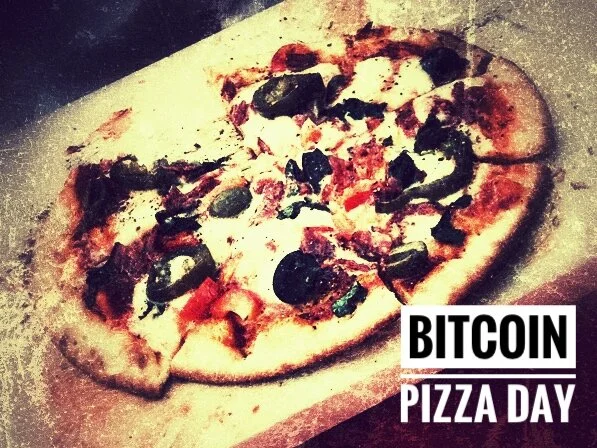
May 22 is an notorious day for Bitcoin, it is the anniversary of the famous pizza transaction.
In summary:
• Bitcoin's market is volatile, with typical price swings around 5% influenced by sentiment and economic factors.
• Weekend trading is thinner, affecting price movements due to lower liquidity among investors.
• Blackrock's Bitcoin purchases help stabilize the market, attracting more stable ETF buyers.
• Regulatory improvements and potential ETF approvals may legitimize Bitcoin, reducing risks for institutional investors.
• Current market conditions suggest it may be a good time to invest in Bitcoin amid ongoing fluctuations.
A summary of the the various factors that contribute to individuals feeling ensnared in what can be aptly described as "The Matrix."
This phenomenon often leads people to conform, submit, and obey societal norms and expectations without fully realizing the implications of their actions.