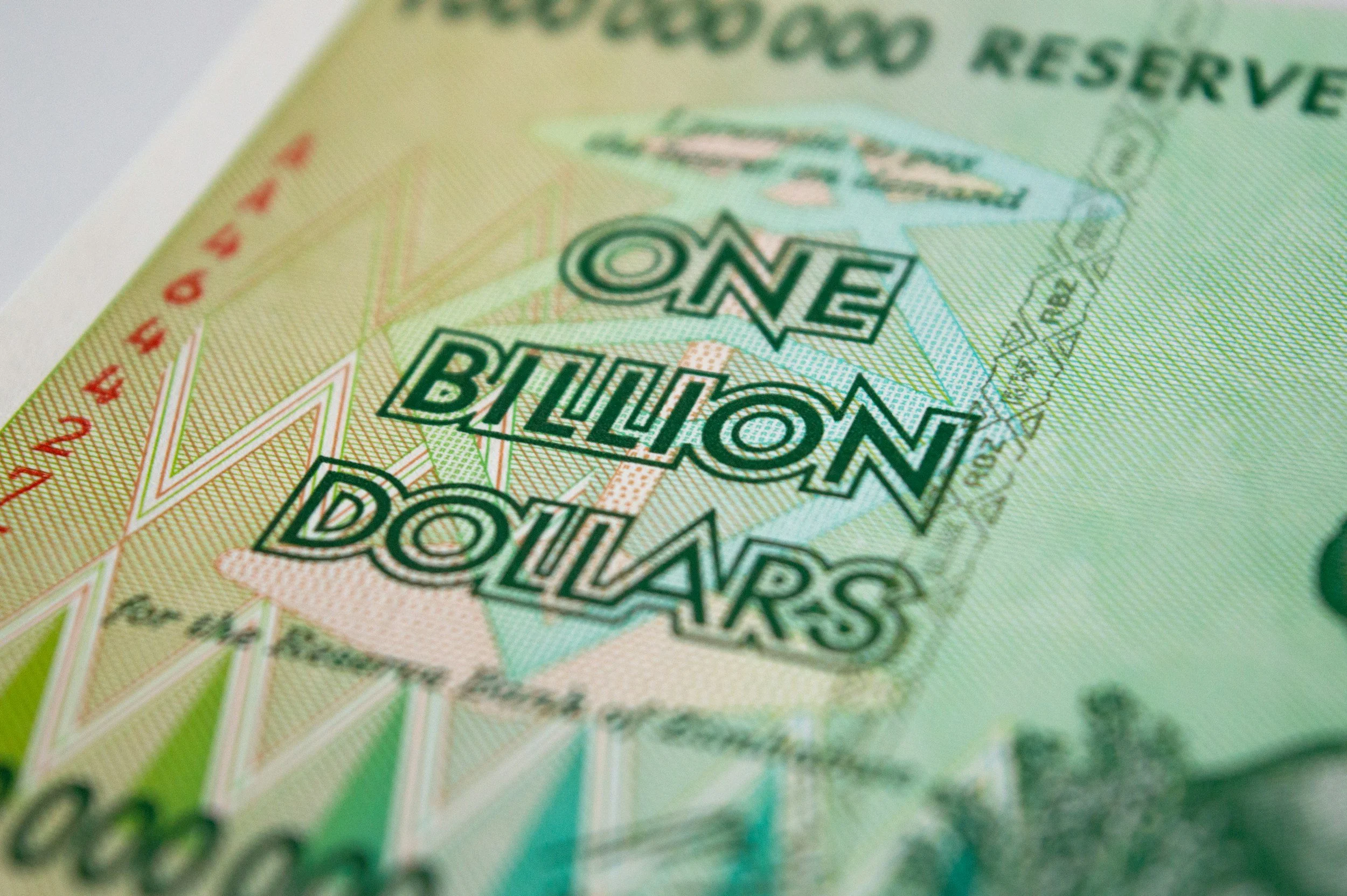
Photo by Rob on Unsplash
1. A Quick History Lesson (in plain English)
Imagine a market where people trade grain, cattle, or a shiny piece of metal because those things actually mean something. That was the world before governments got involved, money was a commodity that anyone could see, touch, and verify.
Fast forward a few centuries and you’ll see a pattern repeat itself:
The state decides which metal can be money.
A privileged bank gets the right to print paper that promises to be redeemable for that metal.
The government tells the bank it can “suspend payments” whenever it feels like it.
What used to be a promise “this note equals one ounce of silver” suddenly becomes “this note IS money, even if there’s no silver behind it.” The result?
Paper money that lives only on the force of law, not on any real value.
That is exactly what Jörg Guido Hulsmann described in his 2008 “The Ethics of Money Production. He argued that fiat money isn’t just a bad policy; it’s a moral crime. By printing money out of thin air, governments misallocate capital, enrich a few insiders, and rob ordinary people of the purchasing power they earned honestly.
2. The “Drop of Ink” Warning
“It takes just a drop of ink to add one or two zeros to a $100 bill. … Miners cannot increase their production ad libitum.” - Hulsmann
He wasn’t talking about a printer in a basement. He was warning us that inflation is a one‑click shortcut for governments to steal wealth. Fast forward to 2026: the U.S. Congress is debating H.R. 1761, the Donald J. Trump $250 Bill Act. A new, larger denomination isn’t a celebration of a president; it’s a confession that the old bills have lost so much value that we need bigger numbers to buy the same loaf of bread. The “drop of ink” has become a “drop of desperation”.
3. When Money Meets Ideology: The Socialism‑Communism Connection
You might wonder, “What does this have to do with socialism or communism?” The link is simple but profound:
Any system that concentrates the power to create money in the hands of a few inevitably slides toward totalitarian control.
Socialism promises collective ownership of the means of production, but historically it has also required a central authority to allocate resources, set prices, and crucially print the money that fuels the economy.
Communism, in its purest theoretical form, abolishes private property altogether. In practice, that means the state owns everything, including the money supply.
When a government can create money at will, it can also fund endless wars, bail out reckless banks, and impose ever higher taxes without the consent of its citizens. Hulsmann called this the “great deception of fiat money*, the very institution that “creates” wealth is the one that “steals it”.
Aristotle warned that such coercive control is a form of tyranny, and Nicole Oresme (writing in the 14th century) echoed the same sentiment. The lesson is timeless:
Centralized money = centralized power = a fertile ground for socialist or communist overreach.
4. The Real‑World Damage of Endless Printing
Economic chaos: Inflation erodes real wages, making home ownership and even basic groceries out of reach for the average family.
Cultural decay: Hulsmann observed that fiat inflation “centralizes government and crushes civil society.” When the state can fund itself by printing money, it bypasses fiscal resistance, prolongs wars, and forces citizens into debt.
Family breakdown: Constant financial stress weakens the “producer of morals” that families traditionally embody.
In short, the more a government can print, the more it can interfere in every facet of daily life, often under the guise of helping the public.
5. Enter Bitcoin: The Digital Equivalent of Gold Mining
If you’ve ever watched a gold miner swing a pick, you’ll understand why Hulsmann’s “natural money” idea is so powerful. Gold can’t be conjured by a pen; it costs energy, labor, and scarce resources to produce. Bitcoin replicates that scarcity in the digital realm:
Fixed supply: Only 21 million coins will ever exist. No central bank can decide to “print” more.
Proof‑of‑Work: Miners must solve complex puzzles, consuming real electricity (the digital analog of digging for gold). This built in cost acts as an insurance policy against arbitrary inflation.
Permissionless: Anyone with an internet connection can participate, bypassing government mandated legal tender laws.
In Hulsmann’s own words, the solution is “abolish legal‑tender laws, let people freely choose what money to use, and allow free competition in money production.” Bitcoin does exactly that.
6. Why Bitcoin Is More Than a Speculative Asset
Most headlines focus on Bitcoin’s price swings, but the real value lies in what it fixes:
Moral rot: By removing the state’s ability to create money out of thin air, Bitcoin restores a moral baseline—money is a contract between people, not a weapon of the state.
War financing: Without a limitless printing press, governments can’t fund endless conflicts without explicit public consent (i.e., taxes).
Bank bailouts: If banks can’t rely on a central bank to “print” money and rescue them, they’ll be forced to behave more responsibly.
Inter‑generational equity: Future generations won’t inherit ballooning debt created by today’s fiat inflation.
All of this is available right now to anyone with a smartphone and the willingness to learn a few basics about private keys and wallets.
7. The Choice We Face
We stand at a crossroads:
Keep printing and watch history repeat itself—higher denominations, weaker purchasing power, deeper government control, and the ever‑looming specter of socialist or communist overreach.
Adopt sound money a system where scarcity, competition, and decentralization keep power in the hands of individuals rather than a monolithic state.
Bitcoin is not a magic bullet that will instantly solve poverty or eliminate every economic problem, but it removes the most dangerous lever:
The ability of a few to inflate away the wealth of the many.
8. A Call to Action (Without the Hard‑Sell)
If you’re tired of hearing about “new bills” and “inflation” and want a concrete way to protect your savings and your freedom, consider learning more about Bitcoin:
Read the original whitepaper (just nine pages, written by Satoshi Nakamoto).
Try a small, non‑speculative purchase using Bitcoin: maybe a coffee or a digital book.
Talk to friends and family about why a fixed‑supply, permissionless currency matters beyond price charts.
The solution is already here; it just needs adoption to become the “natural money” Hulsmann envisioned.
9. Closing Thought
Hulsmann wrote, “Take away the ability to print money and you take away the ability to wage endless wars without popular consent”, Bitcoin is the tool that makes that possible. It could well be the last remaining solution to a problem that has plagued humanity for centuries.
The choice is yours: let the drop of ink keep darkening our future, or let Bitcoin illuminate a path toward a freer, more stable world.
Further reading:
Jörg Guido Hulsmann, “The Ethics of Money Production” (2008)
Satoshi Nakamoto, “Bitcoin: A Peer‑to‑Peer Electronic Cash System” (2008)
DISCLAIMER
This publication is general in nature and is not intended to constitute any professional advice or an offer or solicitation to buy or sell any financial or investment products. You should seek separate professional advice before taking any action in relation to the matters dealt with in this publication. Please also note our disclosure here