

Financial Goals - What are they? (1/3)

image by chiara bonetto

Christmas is just around the corner, before you know it, we will be in the new year!

At the beginning of the each year, most people are asked by their employers to work on their personal goals and objectives to ensure that they are aligned with the corporate goals and objectives.

Just like corporations, you should ensure that you to have set your own goals and objectives. I will focus on financial goals, but you should also regularly look to create and review family, health, career and other personal goals. 

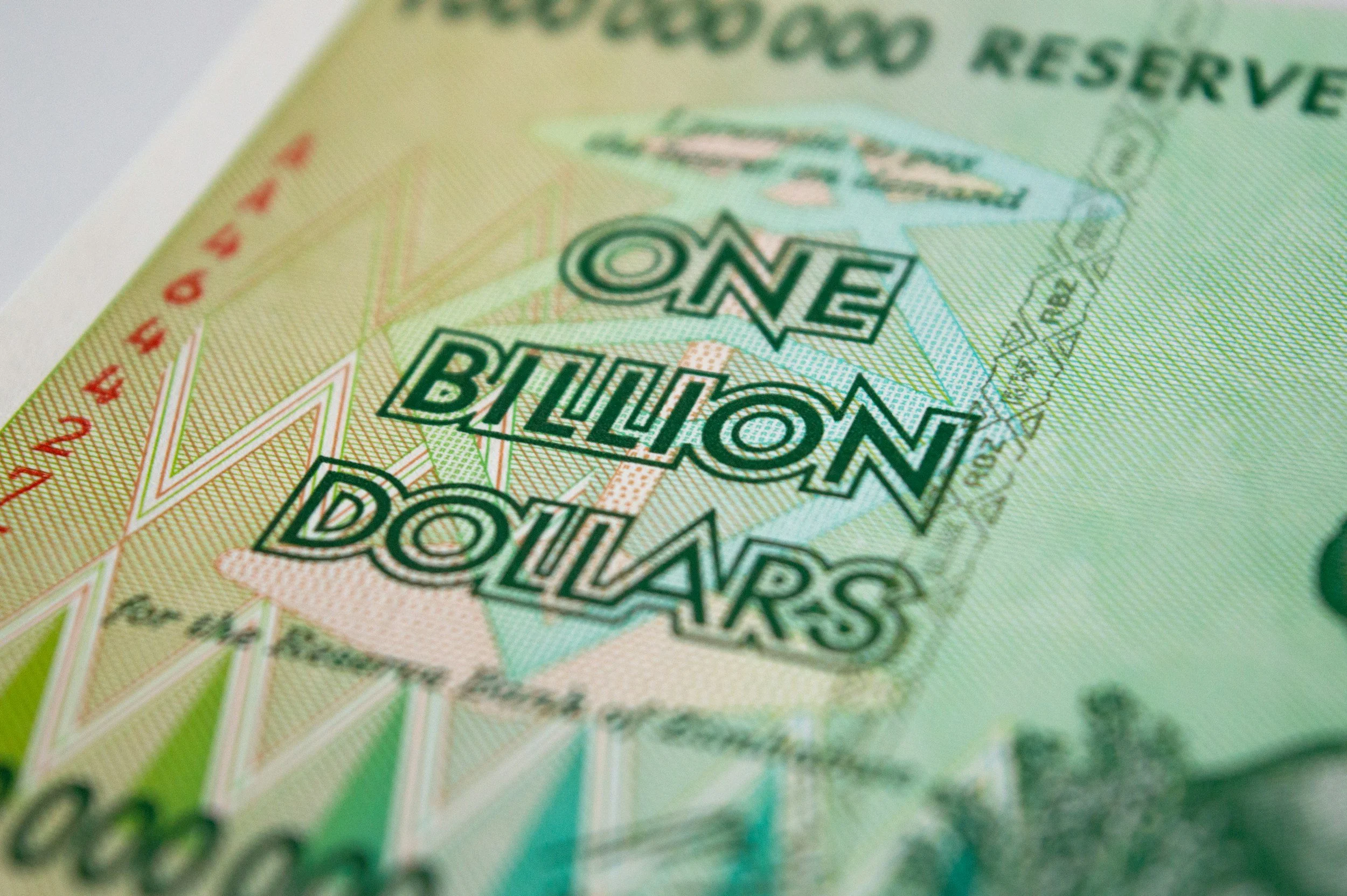
Paying off debt, starting a dollar cost average (DCA) savings plan (see DCA blog here) or even just putting something aside for that special holiday, a few infinity fiat currency units today (dollar, pounds, euros) can add up to a lot of scarce money (gold, silver, bitcoin) down the road. 

If you do not know where you are headed, where do you start walking towards?

So to ensure you end up where you want to be - you will need to set specific financial goals.

What are financial goals?

They are the specific goals and objectives created by you when it comes to your personal finance. They are therefore unique to your personal and family situation, with defined targets for you and your family to achieve over the short, medium or long term.

Examples of financial goals include:

  • Saving $30k for a new car within 2 years

  • Having 6-month of emergency funding within 18 months

  • Earning an additional £1000 per month for a year

  • Paying off your mortgage 10 years early

  • Become financially free within the next 5 years

One thing you will notice is that the above financial goals are all SMART goals. The SMART acronym stands for:

  • Specific - This means that objectives must be clear, for example it must state that an individual needs to make more money, reduce waste, reduce environmental impact, increase sales etc.

  • Measurable - an individual must be able to measure whether they have met an objective. ie needs to specify an amount. For example, an individual may want a £10,000 increase or a 25% decrease.

  • Agreed - its important that all family members are aware of and agree with the family financial goals, this will give objectives a much better chance of succeeding.

  • Realistic - Objectives must be realistic. For example, earning and extra $10000 a month to start with on a basic of $1000 a month salary isn’t realistic, maybe starting with an extra $200 is more realistic, and you can build up to the $10000.

  • Time-bound - Objectives must have a time limit, for example 6 months or 1 year.

The goal of this blog was to introduce a few examples of what financial goals look like and secondly to introduce the SMART framework for defining goals. Look out over the next few weeks when we cover part 2, why financials goals are so important to set and finally part 3 - how best to set financial goals. 

This blog is dedicated to “das fibonator” 

DISCLAIMER:

This publication is general in nature and is not intended to constitute any professional advice or an offer or solicitation to buy or sell any financial or investment products. You should seek separate professional advice before taking any action in relation to the matters dealt with in this publication. Please also note our disclosure here

DCA Signals

As requested, we are doing a followup on the article we published on dollar cost averaging. If you haven’t read the original article, here is a link: DCA strategies (includes enhanced RSI version).

We have had many requests from visitors to our site to provide a service to notify them when the daily “RSI 90” DCA strategy triggers a buy signal for gold, bitcoin and our RAAINDEX strategy.

If you would like to be added to the mailing list (small monthly cost) to receive a weekly email with this information (format below), use the contact page to let us know and we will arrange to sign you up.


Last week (20-Sep-2021 to 26-Sep-2021) generated the following “RSI 90 DCA” signals:

  • Gold - 7/7 buys signals (month to date incl. 26th Sep - 19 buys signals)

  • BTC - 1/7 buys signals (month to date incl. 26th Sep - 1 buys signals)

  • RAAINDEX - tbc (*)


DISCLAIMER:

This publication is general in nature and is not intended to constitute any professional advice or an offer or solicitation to buy or sell any financial or investment products. You should seek separate professional advice before taking any action in relation to the matters dealt with in this publication. Please also note our disclosure here

Happy 2nd Birthday - Rational Active Allocation

Screen Shot 2021-08-17 at 09.52.10 copy.png

Just wanted to say a big thank you to our followers on our 2nd birthday!

Here are some 2 year KPI's:

  • Out performed BTC (530% since inception)

  • Greater than 10x Asset Under Management (AUM) growth

  • Above average copier investment ($8.96k)

  • ICONOMI "Verified" Public strategy

Screen Shot 2021-08-17 at 09.51.57 copy.png

Chart above is from the platform where our strategy for the public is run, very proud of our 2 year track record outperforming bitcoin. Since inception we have returned 530%.

Big thanks to the team at ICONOMI for their wonderful platform and continued support. Lastly, to our fellow strategy managers, thanks for keeping us honest and we are happy to be your partners in this industry.

If you haven’t yet joined our public "platform verified” crypto strategy Rational Active Allocation, you can do so with as little as £10 per month, follow the button below to get started. (*)

Copy Strategy now

* You will need to register on the ICONOMI platform before you are able to copy our strategy.

This blog is dedicated to my co-founder “lovebtcuk” , here’s to many more sir!

DISCLAIMER:

This publication is general in nature and is not intended to constitute any professional advice or an offer or solicitation to buy or sell any financial or investment products. You should seek separate professional advice before taking any action in relation to the matters dealt with in this publication. Please also note our disclosure here

The Bitcoin lottery or hedge (Part 2)

image by Elena Mozhvilo

This is a follow on article, I’d highly recommend that you first read - How do the top 1% stay in the top 1%?

In that article, to summarise, we cover:

  • highlevel Credit Suisse global wealth report numbers

  • pyramid of 4 global wealth categories

  • how the top top category, 1.1% of the population controls 45.8% of the global wealth and top 2 combined - 12.2% of the population controls a staggering 84.9% of all the global wealth

  • how the top 1% stay in the top 1% - they hedge for all outcomes

  • how many oz of gold are required to remain in the top 1% should we go back to a gold like or sound money standard when our fiat systems fail (why - because they always do fail in the end)

If you missed it - the magic number is 14oz of gold (per adult) to stay in the top 1%.

This got me thinking about Bitcoin, which is often compared to gold as a store of value type asset and I’m sure you will see from previous blogs, post and tweets - both are equally important as a hedge against:

  • money printing (or what ever you want to call it - same outcome)

  • inflation targeting (policies designed to destroy your wealth over a short period of time)

  • negative yielding bonds (more theft and logically it’s nonsensical - no sane person would ever lend money to others and pay them interest too).

So the question I’m going to try and answer here is how many bitcoin (BTC) would you need to stay in (or join) the top 1%?

Obviously the assumption is that neither fiat money or a gold standard survive and we move to a pure bitcoin standard where all the world’s wealth is backed by BTC.

This article is not about getting the exact mix of fiat, gold and bitcoin - its more about what the 100% BTC hedge would look like. At some point in the future, I will do a part 3 to this series with some calculations based on different probabilities i.e. 50/50 mix of gold and BTC or a 33% mix of Fiat, Gold and BTC.

When it comes to gold this is a moving target as more gold is mined each year, however the amounts we are talking about would not be material and when performing the same calculations for BTC, there are important points to factor in:

  • not all 21 million coins are available at present (i.e. not all have been mined)

  • and some are lost forever (approx 3.7 million) - more of this here if you are interested

So with this in mind we have done the calculations based on 17.3m Bitcoin in total. If you take all the adults in the world (5.23 billion), that comes to only 0.0033 BTC available per adult. If you divide the total world’s wealth ($418 trillion) by 17.3m BTC - that a staggering $24.16million per coin.

To either stay or join the top 1% you will need to own 0.0414 Bitcoin (per adult)

At todays price (~$33.4k) thats about $1383 (1164 Euro or £995) worth of BTC per adult to hedge yourself against FIAT. Put differently, you could see it as a lottery ticket to join the world’s elite. The question for you is if you think its worth taking the hedge or ticket for 0.0414 BTC - I know what I’d do.

DISCLAIMER:

This publication is general in nature and is not intended to constitute any professional advice or an offer or solicitation to buy or sell any financial or investment products. You should seek separate professional advice before taking any action in relation to the matters dealt with in this publication. Please also note our disclosure here

How do the top 1% stay in the top 1%?

image by Geoff Brooks

I recently came across a very good video on YouTube put together by “belangp” titled “How Much Gold do you Need to Protect Your Wealth?”. I have included a link to the video below this article if you are interested.

The video basically explains how the world’s wealth is distributed among the world’s population. The analysis is based on the Credit Suisse global wealth report numbers published in June 2021. Global wealth is split into a pyramid of 4 categories:

  • Greater $1m

  • Between $100k and $1m

  • Between $10k and $100k

  • Less $10k

What is amazing is how much wealth is in the top category (45.8% - $191 trillion) and how few people there are in that category (1.1% of population or about 56m adults).

The top 2 categories combined, 12.2% of the global adult population (639m of 5.24b) control a staggering 84.9% of all the global wealth.

Here is a view of the pyramid:

So back to the title of our blog - How do the top 1% stay in the top 1%? The answer is -

“They manage risk better and they cover their bases. In other words they hedge themselves for different outcomes”

The second part of the video explains how the wealthiest people in the world calculate how much gold they would need to stay in the top 1% should fiat currency fail.

I’ll let you watch the video on your own, but based on the total global gold (approx 6 billion oz) it would require ~14oz to stay in the top 1%. At today’s prices (~1800/oz) that’s about $25200 which will be revalued to $1million should we go back to a gold like or sound money standard. The secret is, the top 1% have taken this hedge for themselves and their partners to ensure that should things change, they are perfectly positioned.

DISCLAIMER:

This publication is general in nature and is not intended to constitute any professional advice or an offer or solicitation to buy or sell any financial or investment products. You should seek separate professional advice before taking any action in relation to the matters dealt with in this publication. Please also note our disclosure here

How Much Gold do you Need to Protect Your Wealth?